
Key Poses and What They Mean
One of the most important aspects of dog training and care is understanding your dog’s body language. Dogs communicate with us primarily through non-verbal cues, and learning to recognize these can greatly improve your relationship with your pet. In this article, we’ll break down several common dog poses, explain what they mean, and how you can respond appropriately.
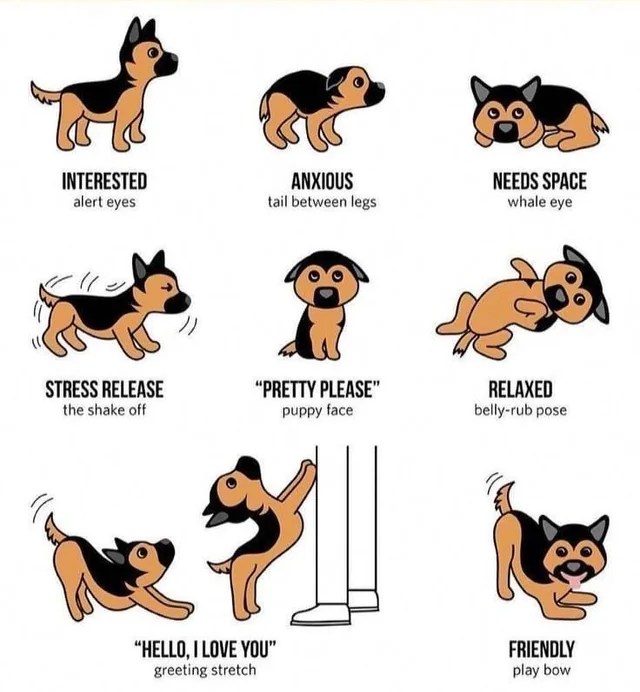
1. Neutral and Relaxed Pose
What it looks like:
- Ears: In a neutral position (not pulled back or perked forward)
- Eyes: Soft, not wide open or narrowed
- Body: Relaxed posture, not tense or stiff
- Tail: Hanging naturally, not rigid or wagging rapidly
What it means: A neutral and relaxed pose is a sign that your dog feels comfortable and at ease in their environment. They’re neither anxious nor excited, simply content and calm. This is often the default pose when your dog is resting or observing their surroundings without concern.
How to respond: This pose is an invitation to engage calmly with your dog, whether it’s petting or playing. It’s a sign that your dog trusts you and feels comfortable around you.
2. Sleeping Pose
What it looks like:
- Position: Lying on their side or back with paws in the air
- Eyes: Closed or partially closed
- Body: Completely relaxed with no tension
What it means: When a dog sleeps on their back with their belly exposed, it’s a sign of trust. They are in a deep, restful sleep and don’t feel threatened. It’s a vulnerable position, indicating that they feel completely safe and secure in their environment.
How to respond: Avoid disturbing your dog while they’re in this position, as it’s a signal that they’re in a peaceful state. If you want to pet them, gently approach and wait for them to wake up naturally.
3. Happy Pose
What it looks like:
- Ears: Relaxed or slightly perked up
- Eyes: Soft and bright, often with a “smiling” expression
- Body: Relaxed, sometimes with a wagging tail
- Tail: Wagging loosely or in a wide arc
What it means: A happy pose is a sign that your dog is in a positive emotional state. They are relaxed, comfortable, and enjoying their environment. This is often seen during play, when your dog greets you after a long day, or during fun activities like walks.
How to respond: This is a great time to engage with your dog! Play, give them affection, or reward them for good behavior. Your dog is feeling joyful, and it’s an excellent time to strengthen your bond.
4. Excited Pose
What it looks like:
- Ears: Forward, sometimes twitching
- Eyes: Bright, wide open
- Body: Bouncing or springing up and down
- Tail: Rapidly wagging, sometimes held high
- Vocalization: Whining or barking
What it means: An excited pose indicates that your dog is anticipating something, like going for a walk, playtime, or seeing someone they love. They are filled with energy and eager to engage.
How to respond: While excitement can be endearing, it’s important to help your dog learn to calm down, especially in situations where their energy needs to be controlled (e.g., during walks). Encourage calm behavior before engaging, especially if you’re teaching obedience.
5. Frightened or Frigidity Pose
What it looks like:
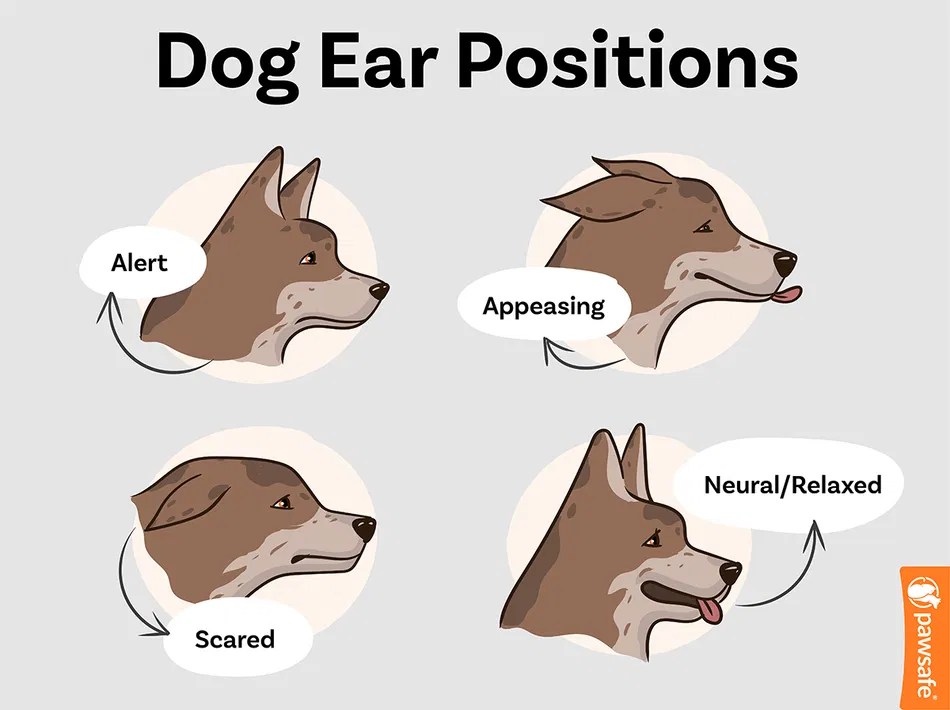
- Ears: Pulled back tightly against the head
- Eyes: Wide, pupils dilated
- Body: Crouched low to the ground or trying to make themselves smaller
- Tail: Tucked tightly between the legs
- Movements: Hesitant, possibly trembling
What it means: This pose indicates fear or anxiety. Your dog may feel threatened or uncomfortable due to a sudden noise, a new environment, or unfamiliar people or animals. It’s a sign that your dog wants to avoid a situation.
How to respond: Respect your dog’s space. Don’t push them into uncomfortable situations. Calmly remove them from the source of stress if possible, and provide reassurance with a soothing voice and gentle touch. Never punish a frightened dog, as it can make the fear worse.
6. “Flee” Pose (Flight Mode)
What it looks like:
- Ears: Forward or flat against the head
- Eyes: Wide and focused, darting around
- Body: Tense, body turned toward the nearest escape route
- Tail: Tucked or between legs
- Movements: Quick, eager to run or hide
What it means: A dog in “flee” mode is experiencing extreme stress or fear and may be attempting to escape from a perceived threat. They may dart away, hide, or attempt to run to safety.
How to respond: Allow your dog space to retreat and remove them from the source of fear if possible. Avoid chasing them, as it can increase their stress. Provide reassurance once they’ve had time to calm down.
7. Defensive Aggressive Pose
What it looks like:
- Ears: Pulled back, flat against the head
- Eyes: Narrowed, staring intensely
- Body: Stiff, posture upright or leaning forward slightly
- Tail: Raised and stiff, held straight out or slightly downward
- Movements: Standing their ground, growling, or barking in warning
What it means: A dog in a defensive aggressive pose feels threatened and is trying to protect themselves. They may be fearful of the situation but are using aggression to defend themselves. This pose often happens when a dog is confronted by something or someone they perceive as a threat.
How to respond: Stay calm and avoid making any sudden movements that could escalate the situation. Give your dog some space to retreat if they need it, and avoid punishing them for being defensive. Instead, work on positive reinforcement training to help them feel more secure.
8. Offensive Aggressive Pose
What it looks like:
- Ears: Forward and alert, possibly pricked
- Eyes: Wide open, staring directly at the threat
- Body: Stiff, with a forward-leaning posture
- Tail: Raised and stiff, held high
- Movements: Lunging forward, growling, snarling
What it means: An offensive aggressive pose indicates that the dog is in an offensive, attack mode. This is often a result of a perceived challenge to their territory, resources, or themselves. They may be ready to attack or bite.
How to respond: This pose indicates a high level of stress or aggression. Remain calm, avoid confrontation, and try to remove the dog from the situation if possible. Never attempt to “dominate” or punish an aggressively behaving dog, as this can increase aggression. Consult with a professional dog trainer or behaviorist for help in managing aggressive tendencies.
Conclusion
Understanding your dog’s body language is key to providing them with the best care and training possible. By recognizing and interpreting their poses, you can respond in ways that build trust and ensure a healthy, happy relationship. Remember, each dog is unique, so always observe their individual behavior in different contexts. With patience and attention, you’ll become fluent in your dog’s “language,” improving your bond and fostering a deeper understanding.
 omegapaws.blog